People of the Year Award
Alexandra Senfft accompanying Tomi Reichental to RTE (Ireland’s National Television)
«People of the Year Award», Dublin 6th December 2014, and commenting on his award
Tomi Reichental, one of only two holocaust survivors living in Ireland, has dedicated his time to speaking
about his experience in schools. He is presented with the International Person of the Year.
>>watch
Category Archives: Nazi-era
Close to Evil – A haunting and expertly-crafted documentary
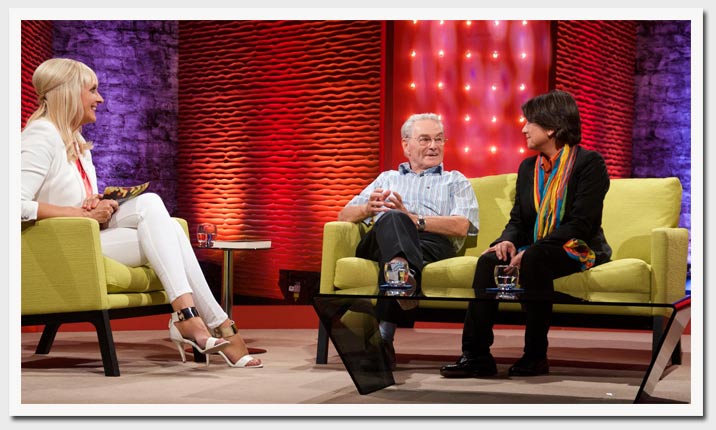 With Holocaust survivor Tomi Reichental in TV Show “Saturday Night with Miriam”, Ireland
Earning a runner-up spot in the Best Irish Feature Documentary Award last year, despite screening as a “work in progress”, Close to Evil returns with an extended cut featuring all-new footage. An RTÉ Radio interview marking Holocaust Memorial Day in January 2012 is the catalyst for a remarkable two year journey. Holocaust survivor Tomi discovers one of his former jailers — Hilde Lisiewicz is alive and living in Hamburg. Lisiewicz is a convicted War Criminal. Nevertheless Tomi reaches out to Hilde to offer reconciliation. Hilde asserts she is “a victim of victor’s justice”. This prompts Tomi to investigate the SS woman’s claims of innocence. Unexpectedly Tomi’s odyssey ends where his story began, back in his native Merasice, meeting the ghosts from the past and embracing a German woman directly related to the man who played a role in the liquidation of Tomi’s family.
Alexandra Senfft, featuring with Tomi Reichental in Gerry Gregg’s film «Close to Evil»
on RTE 1 (Radio Telefis Eireann’s), Irleand
1 September 2014, 9.35 pm
>> www.rte.ie/archives/2014/0827/639627-close-to-evil
«Living with the Dead: Sharing the Truth and the Pain of the Past»
in: Clio’s Psyche: Understanding the “Why” of Culture, Current Events, History, and Society
Special Issue on Psychology and the Holocaust: Part II
Meeting Report, Volume 21, Number 2, New York, September 2014, Pages 210 ff
excerpt:
Tomi, my grandfather is dead, but you are alive,” I say. Tomi agrees with a sense of relief as we hold on to each other, somewhat lost and yet not alone. We still have a long way to go in order to come to terms with a past that is haunting most of us up to this day. Sharing this experience with Tomi was the right thing to do. My daughter and the film team were with us and wrapped us in cotton wool, supporting us in our shared sorrow. We weren’t alone at all. Dan Bar-On once said to me “Alexandra, you might lose some of your family over working through the past, but you will find others to fill their place.” “It couldn’t be truer,” I think gratefully, as Tomi and I leave the cemetery arm in arm, nestled by a cocoon. In the face of the rising populist, right-winged develop-ments in Europe, I wonder though if all our efforts are too late.»
>> more
«A powerful film, incredibly moving, at times almost unbearable»
Darragh McManus reviews RTE’s «Close to Evil’»
Irish Independent 24/08/2014
>> more
The encounter that transcended years of horror
A moving meeting between a survivor of Bergen-Belsen and the descendant of a war criminal who had a hand in the deaths of his family has been caught on TV by Gerry Gregg
Irish Independent 24/08/2014
>> more
«The Transmission of a Troubled Past: Between the Personal and Professional»
Introduction to an event at the University College of London, May 2014:
«The Transmission of a Troubled Past: Between the Personal and Professional –
Alexandra Senfft, author: In conversation with Stephanie Bird, UCL»
by Dr. Julia Wagner, University College of London, Germany
>> pdf
Silence is Such Sorrow – Schweigen tut weh
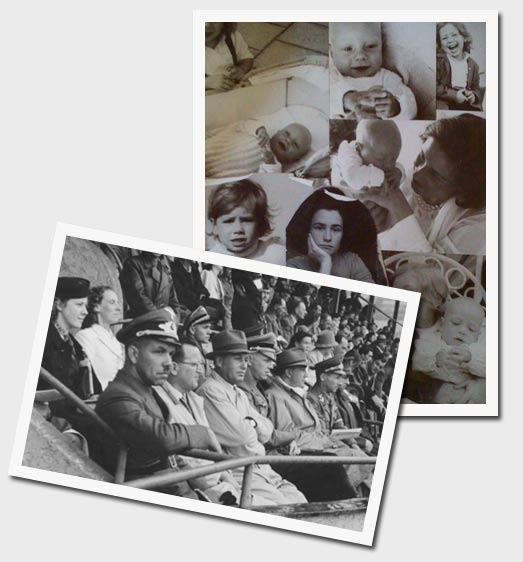 Despite the fact that Germans, both academically and politically, have taken great strides towards exposing the crimes committed during the National Socialist period, silence still continues to rule with respect to the biographical handling of the past. Not only within the context of families, but also in society more generally, the perpetrators are always »others«.
JMB Journal 6 »Generationen«, July 2012
>> more
German Grandchildren Of Nazis Delve Into Past
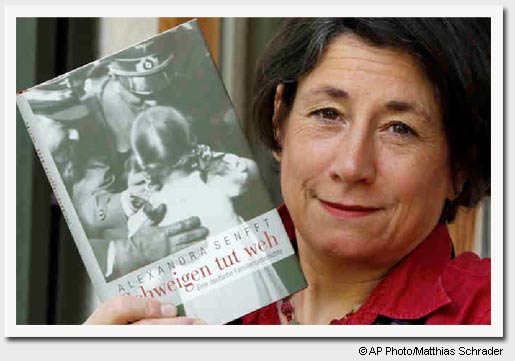
»In her book, “The Pain of Silence,” Senfft describes how a web of lies burdened her family over decades, especially her mother, who was 14 years old when her beloved father was hanged. “It was unbearable at times to work on this book, it brought up fears and pain, but at the same time I got a lot out of writing it all down,” Senfft, a lively 49-year-old, explained during an interview at a Berlin coffee shop.«
The Associated Press, Berlin 14.05.2011
>> more
Strawberries with the Fuehrer
Amy O’Connor
Positive Patterns Film
New Zealand 2010
>>more
Dan Bar-On – Dialogue against Walls of Silence and Hostility
Obituary by Alexandra Senfft
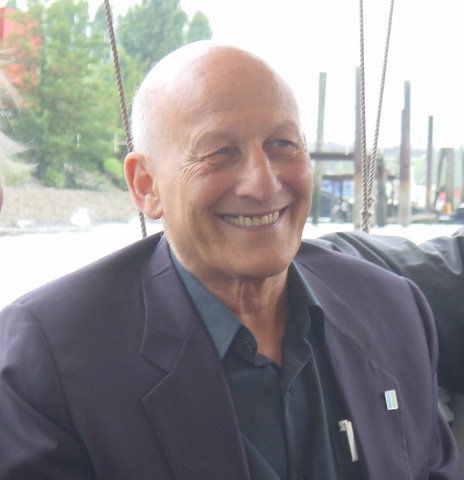
Dan Bar-On Foto: Alexandra Senfft
The Israeli psychologist and author Dan Bar-On died in Tel Aviv on 4 September. Bar-On was a leading force in the field of intercultural conflict management between Israelis and Palestinians.
Qantara, 12.09.2008
>> more